Does homeowners insurance cover tree removal in Florida?
When your policy pays, when it does not, and how to document storm damage so your claim moves quickly.

After every storm our office fields the same question dozens of times a day: will insurance pay for this? The honest answer is that it depends on what the tree hit, why it fell and the wording of your policy. We are not insurance agents or public adjusters, but we have helped thousands of Tampa Bay homeowners document tree damage, and the patterns are consistent.
This guide covers the general rules most Florida homeowner policies follow. Your policy language always wins, so read your declarations page or call your agent before making decisions based on coverage.
When insurance usually covers tree removal
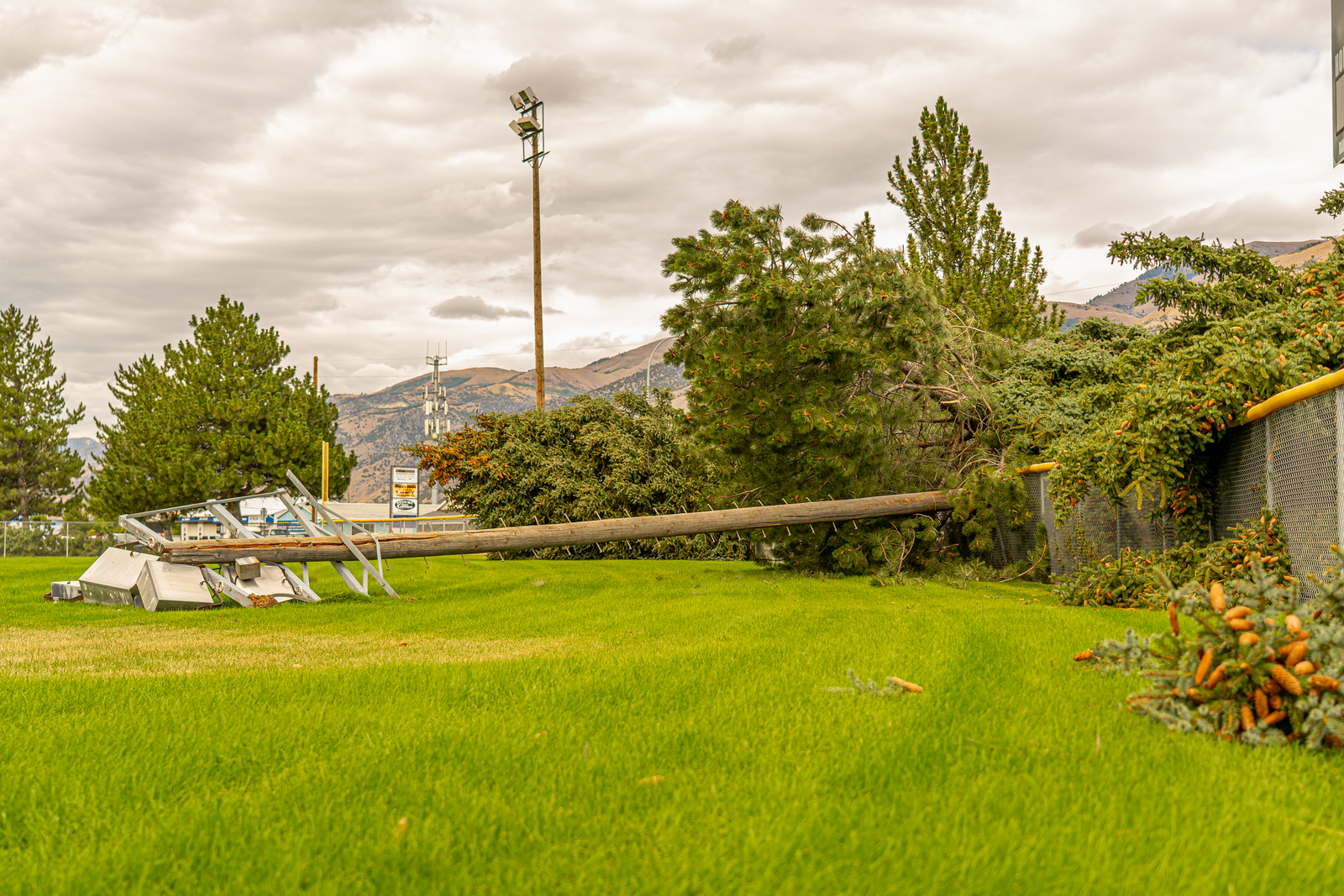
Most standard Florida homeowner policies cover tree removal when a tree falls because of a covered peril, such as wind, lightning or hail, and damages a covered structure. Covered structures typically include:
- Your house, including the roof, walls and attached screen enclosures.
- Detached garages, sheds and other outbuildings.
- Fences, which many policies treat as other structures.
- In some policies, a tree blocking a driveway or a ramp needed for a disabled resident.
Removal coverage is often capped, commonly somewhere between $500 and $1,000 per tree with an overall limit per event. The cost of repairing the structure itself is handled separately under your dwelling or other structures coverage, subject to your hurricane deductible if the damage came from a named storm.
When insurance usually does not pay
- A tree falls in the yard without hitting anything insured. Cleanup is generally your responsibility.
- The tree was dead, diseased or visibly neglected before the storm. Insurers may deny for lack of maintenance.
- The damage is to a vehicle. That falls under the comprehensive portion of your auto policy, not your homeowner policy.
- Your hurricane deductible is higher than the total loss. In Florida that deductible is usually 2 to 5 percent of your dwelling coverage.
If a neighbor's healthy tree falls on your house in a storm, your own policy typically pays. If the tree was obviously dead and the neighbor had been warned, their liability coverage may come into play.
How to document tree damage for a faster claim
Adjusters are overwhelmed after a hurricane. Claims with complete documentation move to the top of the pile because they need fewer follow-up visits. Here is what we deliver on every storm job, and what you should gather if you are working with another company.
- Wide photos showing the tree and the structure together from several angles, before anything is cut.
- Close-up photos of the point of impact and any roof, gutter or screen damage.
- Photos of the root plate or break point, which show the tree failed from wind rather than neglect.
- Time-stamped video of the removal, especially any crane picks off the roof.
- An itemized invoice that separates emergency removal from the structure, debris hauling and stump grinding.
- A short arborist note describing the tree's condition, if there is any question about prior health.
Emergency removal comes first
Most policies require you to take reasonable steps to prevent further damage. That includes removing a tree from a roof and getting a tarp on before rain gets in. You do not need to wait for an adjuster to approve emergency mitigation, but you do need to document it thoroughly and keep receipts.
Working with your adjuster
Ask for your claim number right away and send documentation as soon as you have it. If an adjuster schedules an inspection after the tree is already removed, your photo log becomes the evidence. We are happy to meet adjusters on site or talk them through our documentation by phone. We do not negotiate coverage on your behalf, which is the role of a licensed public adjuster, but we make sure the facts about the tree work are clear and complete.
If you are facing tree damage right now, call our storm line first. Getting the weight off the house safely matters more than any paperwork, and we will capture everything your insurer needs along the way.
This article is general information for Tampa Bay homeowners and is not legal or insurance advice.