Palm tree care in Tampa Bay: trimming, feeding and spotting lethal bronzing
Why over-trimmed palms are weaker, what yellow fronds really mean, and when a sick palm can still be saved.
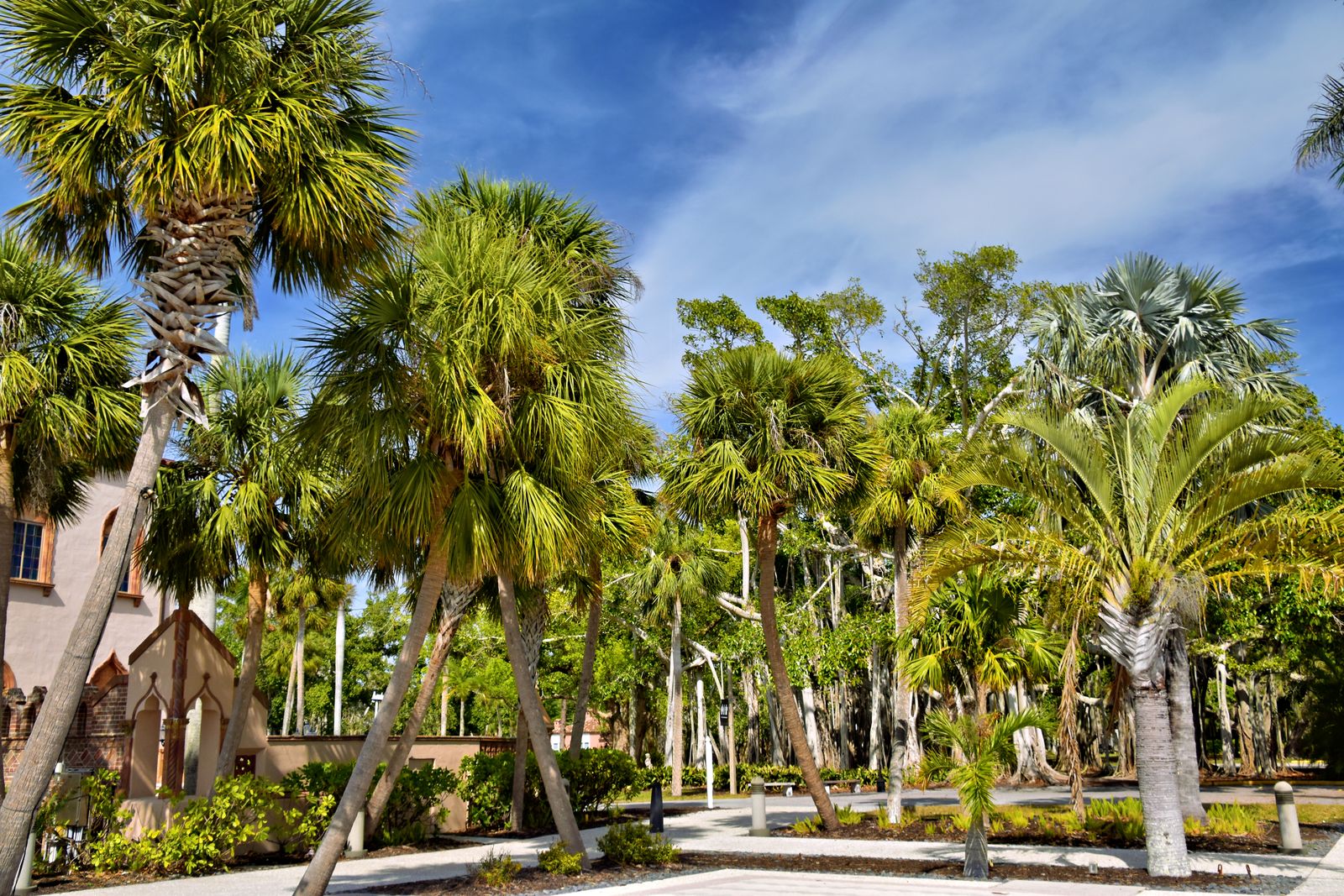
Palms are part of the Tampa Bay postcard, and most homes here have at least a few. They are also some of the most misunderstood trees in the region. Every week we see palms trimmed down to a few fronds pointing straight up, fed lawn fertilizer that makes deficiencies worse, or left alone until a disease has already spread.
Here is what our crews and arborists want every Florida palm owner to know.
Stop the hurricane cut
The so-called hurricane cut removes nearly every green frond and leaves a narrow feather duster at the top. It looks tidy, and many people believe it protects the palm from wind. In reality, it does the opposite.
- Green fronds feed the palm. Removing them starves the trunk and slows new growth for months.
- Over-trimmed palms develop pencil-pointing, a permanent narrowing of the trunk that becomes a weak spot in future storms.
- The fronds that remain are more exposed and more likely to be torn off, leaving the bud vulnerable.
- Palms pull potassium from older fronds. Cutting them off can trigger or worsen deficiencies.
The rule we follow is simple. Remove dead, hanging and broken fronds, seed stalks and loose boots. Leave every healthy green frond that sits above an imaginary line from 9 o'clock to 3 o'clock.
What yellow and spotted fronds mean
Sandy Florida soil drains fast and holds few nutrients. Most discolored palms are hungry, not diseased.
- Orange or yellow spotting on older fronds usually points to potassium deficiency, the most common problem we see.
- A broad yellow band along the edges of older fronds with a green center suggests magnesium deficiency.
- Small, frizzled, weak new fronds indicate manganese deficiency, common in queen and royal palms.
The fix is a palm-specific slow-release fertilizer, usually in an 8-2-12-4 ratio with micronutrients, applied several times a year. Lawn fertilizer high in nitrogen can make potassium deficiency worse. Also note that Pinellas County and several cities restrict nitrogen and phosphorus fertilizer between June and September.
Deficiency damage on existing fronds does not reverse. Success looks like healthy new growth over the next six to twelve months.
Lethal bronzing: the one to watch
Lethal bronzing is a bacterial disease spread by a tiny planthopper, and it has killed palms throughout Hillsborough, Pinellas and Pasco County. It affects sabal, Canary Island date, queen and several other species.
- Early symptoms include fruit dropping prematurely and flower stalks turning black.
- The oldest fronds then turn a reddish bronze color, progressing upward.
- Finally the spear leaf, the newest frond in the center, dies. At that point the palm cannot recover.
There is no cure for an infected palm, and it should be removed to reduce the spread. Healthy palms nearby can be protected with preventive antibiotic injections every three to four months, applied by a licensed professional.
A simple yearly palm routine
- Trim dead fronds and seed pods once or twice a year, ideally in spring before hurricane season.
- Fertilize with a palm-specific blend three to four times a year, following local blackout dates.
- Keep turf and mulch a couple of feet from the trunk to avoid mower and trimmer damage.
- Watch for bronze fronds or a drooping spear leaf, and call an arborist promptly if you see either.
Healthy palms are some of the most storm-tolerant trees in Florida. Give them the right trim and the right food, and they will ride out a season far better than the neighbor's over-pruned feather dusters.
This article is general information for Tampa Bay homeowners and is not legal or insurance advice.