Laurel oak off a bungalow roof
Seminole Heights, Tampa
Overnight crane pick of a 26-inch oak resting on the ridge line, tarp on by 9 a.m.
Fallen trees, hanging limbs and debris piles removed safely, documented for your insurer and hauled away within days, not weeks.
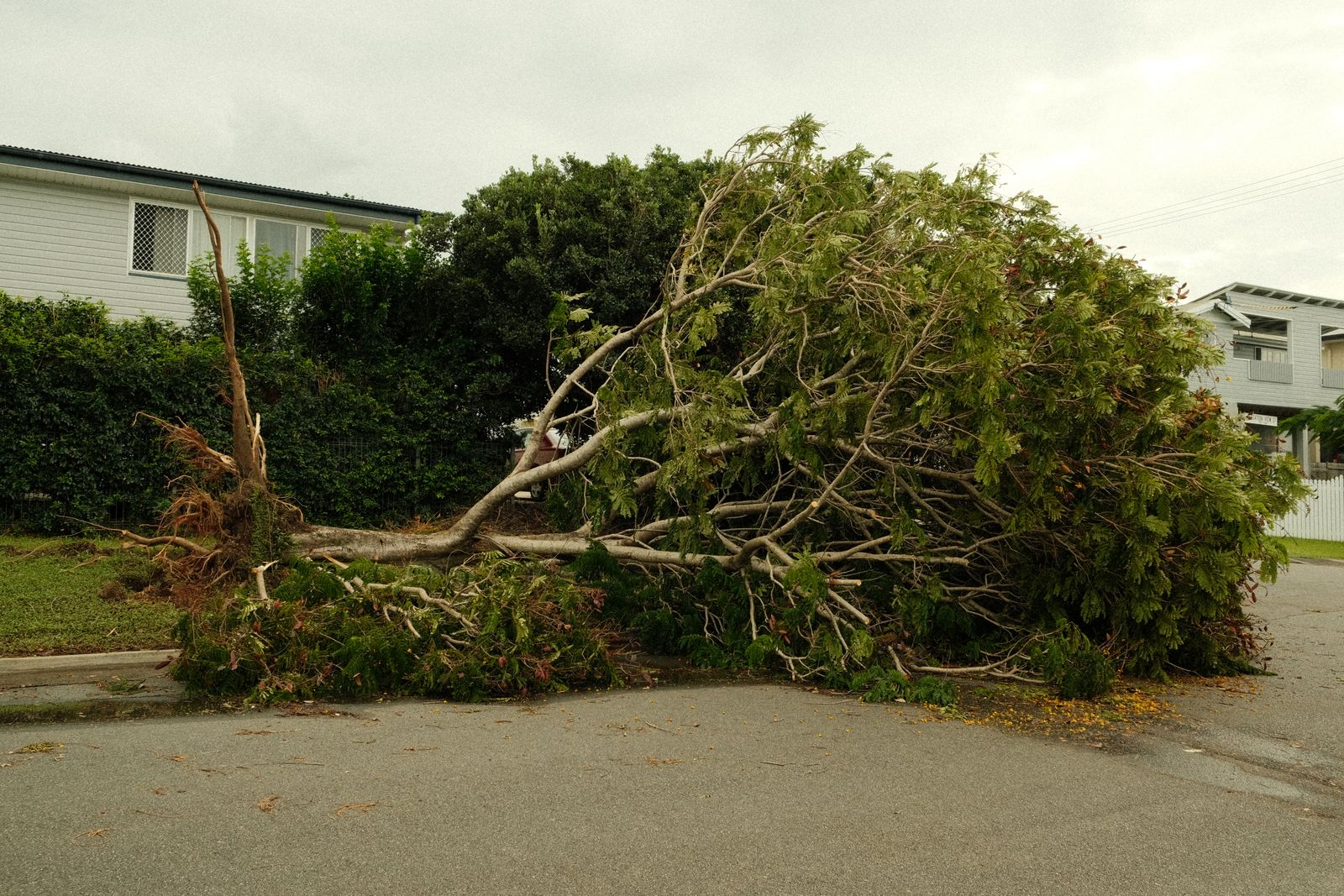
This storm call in Countryside started with a 30-inch oak across the driveway and ended with a raked lawn and a claim-ready photo log.
Sample starting prices. Storm rates are published before June 1 and never raised after landfall.
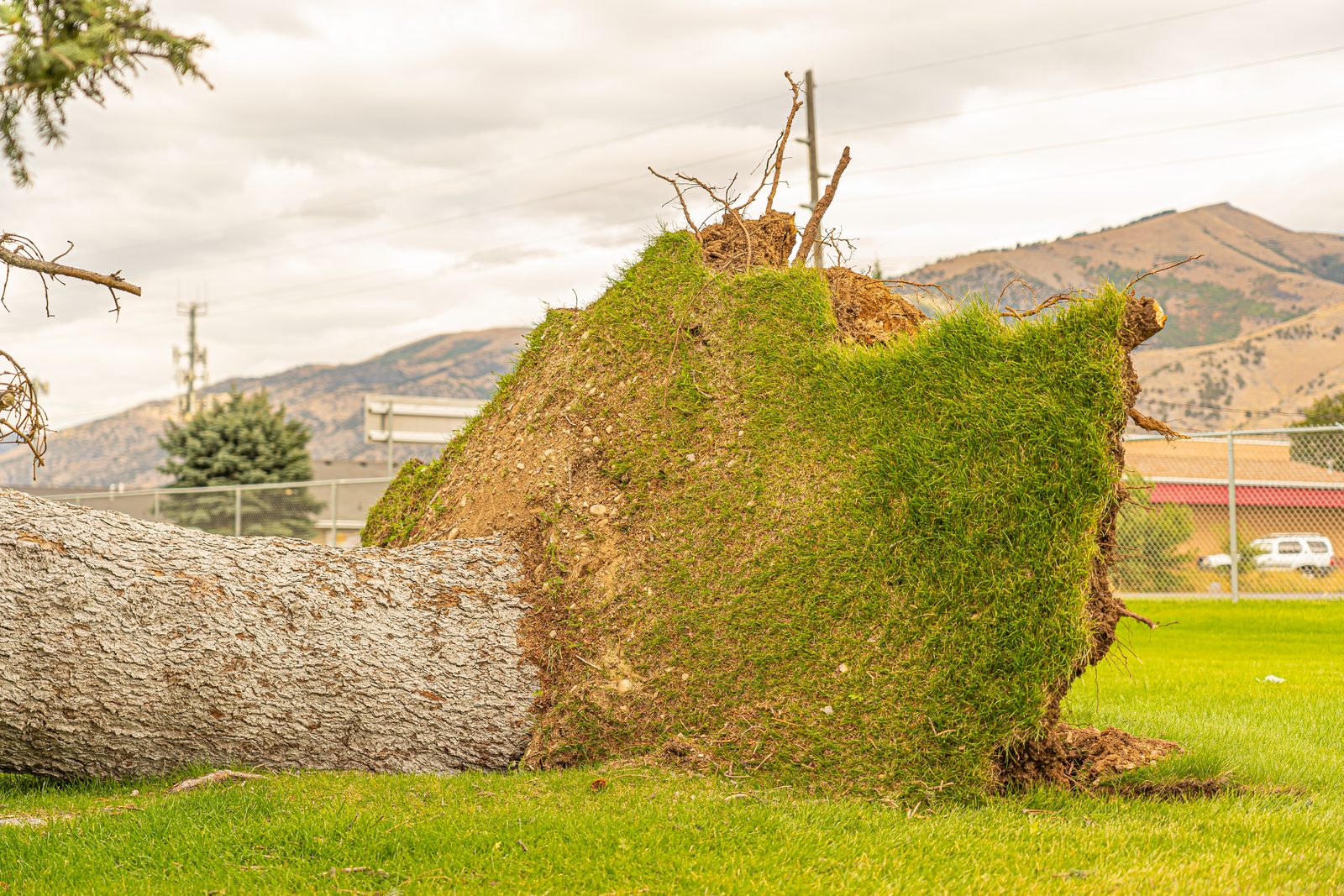
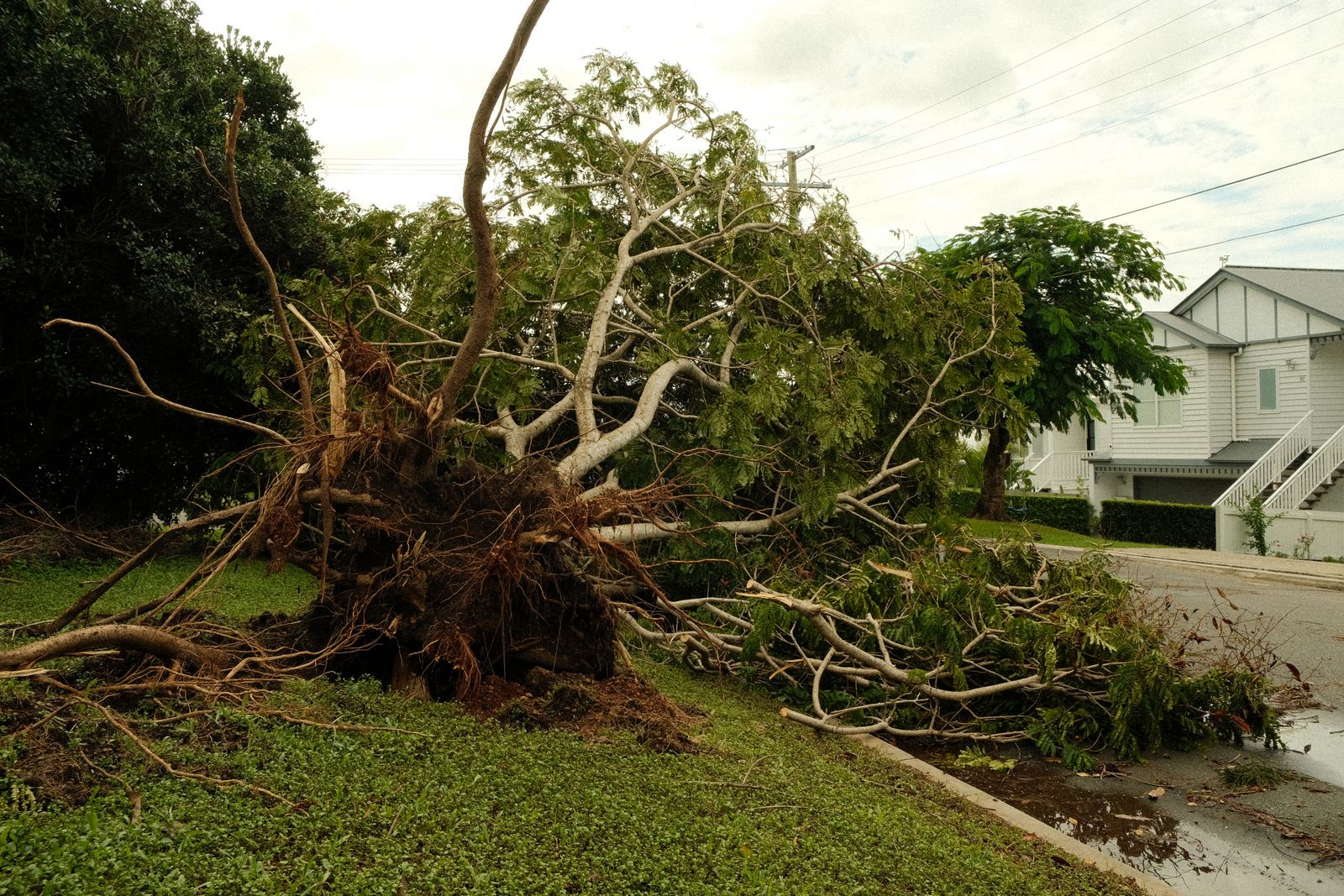
Root plates lifted by saturated soil. We section the trunk, grind the root plate and backfill the crater.
Broken limbs caught in the canopy. Removed first, from a lift or by a climber, before anyone works underneath.
Co-dominant stems torn apart at the union. Some can be braced, many need removal. An arborist decides on site.
Limbs, fronds and logs chipped on site or hauled by trailer load, including debris you already dragged to the curb.
Broken crowns and leaning trunks cut down and removed, with neighboring palms checked for bud damage.
Eighteen items across three phases. Open a phase and check items off as you go.
Species and soil decide most of it. This is the list we work from when a homeowner asks what to do before June.
Live oak
Quercus virginiana
Sheds small laterals, rarely fails whole
The most storm-firm shade tree in Tampa Bay. Dense wood, low centre of gravity, wide root plate. Work is usually deadwood removal and clearance from the roof, not thinning.
Sabal palm
Sabal palmetto
Bends, sheds fronds, holds the bud
The state tree survives category winds by flexing. Failures we see are rot at the bud after flooding, not wind. Never over-prune it before a storm.
Southern magnolia
Magnolia grandiflora
Minor limb loss
Flexible wood and a conical crown. Watch for co-dominant stems with included bark on older yard trees.
Bald cypress
Taxodium distichum
Top breakage in extreme gusts
Deep anchoring even in wet ground. Common along the Hillsborough River and rarely a removal candidate.
Laurel oak
Quercus laurifolia
Trunk and scaffold failure at decayed unions
Fast, weak and short-lived, planted everywhere in Tampa in the 1960s and 70s. Heart rot arrives around 50 years. This is the single most common tree we remove after a named storm.
Water oak
Quercus nigra
Scaffold limbs tear out over roofs
Same story as laurel oak, often worse. Cavities behind old flush cuts, fruiting bodies at the base, and limbs with more leverage than sound wood left to hold them.
Sand pine
Pinus clausa
Uproots in saturated sand
Shallow plate in dry sandy ridges. Saturate that soil for six hours and a sustained 60 mph wind walks the root plate out of the ground.
Queen palm
Syagrus romanzoffiana
Crown snap at a potassium-starved bud
Wind resistance depends almost entirely on nutrition. A chronically potassium-deficient queen palm has a weakened bud and can snap where a fed one bends.
Slash pine
Pinus elliottii
Mid-trunk snap, or uproots as a group
Better in a stand than alone. Pines left standing after a lot is cleared lose the shelter of their neighbours and fail in the first season.
Chinese tallow
Triadica sebifera
Brittle, shatters
Invasive, brittle and short-lived. We recommend removal and replacement rather than cabling.
Ratings follow post-hurricane survey groupings from university extension research and 17 seasons of our own storm work. Field guidance for planning, not a prediction: any tree can fail in the right wind on the wrong soil.
Seminole Heights, Tampa
Overnight crane pick of a 26-inch oak resting on the ridge line, tarp on by 9 a.m.
Kenwood, St. Petersburg
Blocked road reopened within four hours of the wind dropping, root plate ground and hauled.
Countryside, Clearwater
HOA-wide debris and hanger removal after a Category 1 storm, finished in five working days.
A certified arborist walks your property and sends a written quote within 24 hours. No pressure, no surprise fees.
4.9 from 1,284 reviews, ISA Certified Arborists
We value your privacy
We use cookies to run this site, remember your preferences and understand how it is used.Cookie policy